
Most people know that lack of sleep makes them feel tired, irritable, and unfocused. But sleep deprivation does much more than that. It can change how the brain processes memory, emotion, judgment, attention, and even risk.
According to the National Institute of Neurological Disorders and Stroke, sleep is essential for survival and plays a major role in supporting healthy brain function.
Attention and focus start to break down
One of the earliest effects of sleep deprivation is reduced attention. The CDC explains that insufficient sleep affects alertness, reaction time, and concentration, making even simple tasks harder.
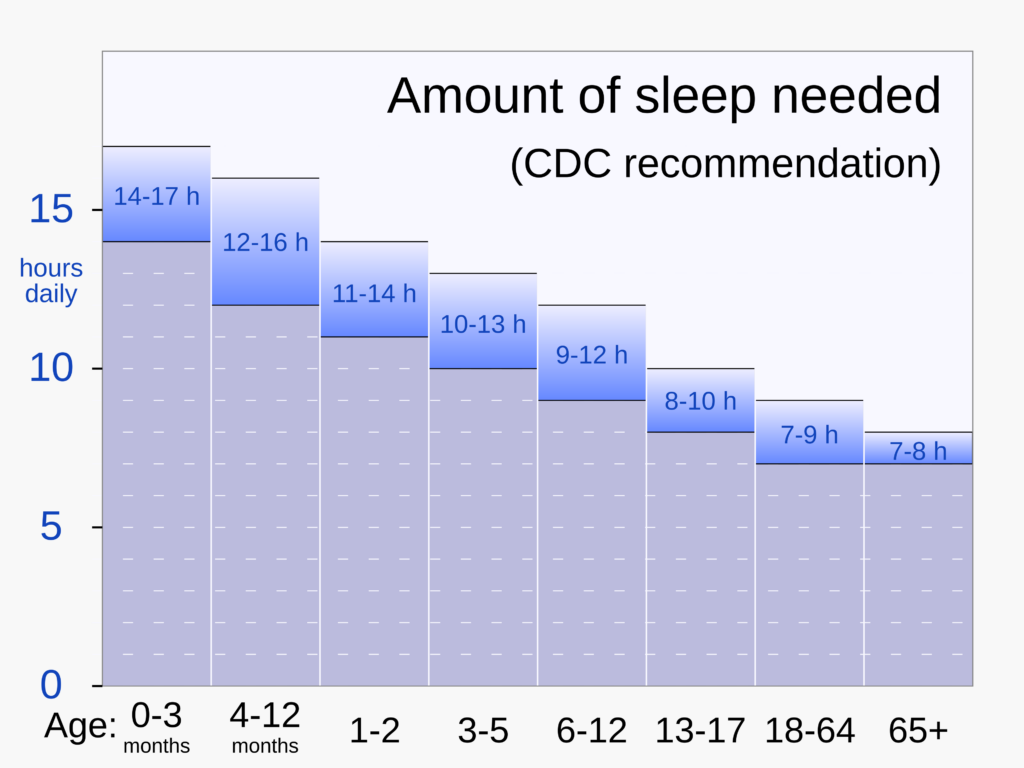
Photo Credits: The Centers for Disease Control and Prevention‘s (CDC) recommendations for the amount of sleep needed decrease with age – Wikipedia.

This is why exhausted people often make more mistakes, miss details, or feel mentally “slow.”
Memory gets weaker
Sleep is deeply connected to memory formation. Harvard Medical School’s Division of Sleep Medicine notes that sleep helps the brain process and consolidate information learned during the day.
Without enough sleep, the brain becomes less effective at storing and organizing memories. You may still experience things, but your ability to retain and retrieve them becomes weaker.
Emotions become harder to regulate
Sleep deprivation does not just affect thinking – it also changes emotional control. Research discussed by the Sleep Foundation shows that too little sleep can increase irritability, stress sensitivity, and mood instability.
That helps explain why people who are sleep-deprived often overreact more easily or feel emotionally overwhelmed by problems they might normally handle better.
Decision-making gets worse
A tired brain does not judge situations as clearly. The National Center for Biotechnology Information has published research showing that sleep loss can impair higher-level thinking, decision-making, and performance.
In practical terms, that means poor sleep can affect work quality, driving safety, impulse control, and problem-solving.
Long-term sleep loss may have bigger effects

Photo Credits: Canva
Chronic sleep deprivation has been associated with broader health and cognitive consequences. The National Heart, Lung, and Blood Institute warns that ongoing sleep deficiency is linked to physical and mental health risks, including effects on mood, metabolism, and overall brain performance.
Sleep is not optional maintenance time. It is a biological requirement for a healthy brain. When sleep is cut short, the brain becomes less accurate, less stable, and less able to perform the tasks people depend on every day.
In other words, sleep deprivation does not just make you tired. It changes the way your brain works.
Leave a Reply